 traffic, but the Saturday before Christmas remains the day of the year with the highest sales) (1) , it has long been considered the kickoff to the holiday shopping season. It is also thought of as a “big” shopping day because, even though it is not recognized as an official national holiday, many businesses give employees the day off (except for retailers, of course). In recent years, it has become a tradition for many people to hit the stores early in the morning--even as early as 4 or 5 a.m. Maybe their motivation is partly the good deals that retailers offer, and maybe also partly the desire to get out of the house after a day cooped up with family, food, and football. This tradition becoming so widespread has contributed to this being known as a big shopping day.
History
The term “Black Friday” refers to times when accounting records were kept by hand, and negative amounts were recorded in red ink and positive amounts recorded in black ink. This day was considered the first day when retailers used more black ink than red. But the term “Black Friday” has seen more use than in the retail sense. Ironically, referring to a day as “Black” has often meant a day of financial catastrophe. Perhaps the earliest reference to Black Friday comes from Sept. 24, 1869, “when plunging gold prices precipitated a U.S. stock-market panic. An attempt by Jay Gould and James Fisk to corner the market in gold and drive up its price depended on preventing the sale of government gold, an arrangement assured through the two men's political influence. When President Ulysses S. Grant heard of the scheme, he ordered the government to sell $4 million in gold, which caused the price to drop and produced a panic selling of other stocks.” (2) “Black Tuesday” has been coined to describe the day of the great stock market crash on October 29, 2009. Similarly, “Black Monday” is often remembered as October 19, 1987, when the stock market saw its sharpest drop since “Black Tuesday.”
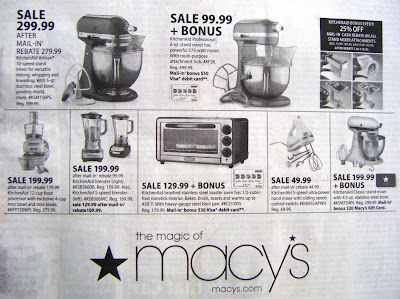 In terms of shopping, though, the day after Thanksgiving has been regarded as the kickoff to the holiday shopping season since the start of the Macy’s Thanksgiving Parade in 1924. The day after Thanksgiving, retailers would begin their “After Thanksgiving Sales,” of which shoppers were eager to take advantage. “During the Great Depression, President Roosevelt changed the date of Thanksgiving to a week earlier so that merchants could have more shopping days in the season in which to sell their wares.” (3) The day was not called “Black Friday” until around 1966 in Philadelphia when shoppers clogged the streets, causing chaos for police, who gave the day its new name. Still, this name for the holiday season kickoff did not see widespread popularity until recent years, around 2002. (4)
Black Friday 2009
After a year of recession and even longer in a sluggish economy, many retailers are placing even more hope than usual in their holiday sales to boost their annual profits. However, even though reports indicate that the recession has past, the lingering effects still remain. Unemployment and underemployment is still very high, and the effects will continue through the holiday season. Even those who keep their jobs have reportedly learned from past financial mistakes and the hit they have taken in the last couple of years, and will subsequently shop much more conservatively this year. Many shoppers report that they do not plan on purchasing with credit anymore, and are shopping just for the good deals and nothing else—news that retailers do not like to hear. Their doorbusters are meant as a means to get you in the door… so that you can also buy other things. I like to see people being smarter about their shopping and spending habits, although I hope retailers can figure out a way to stay profitable (perhaps--shock!--in ways that do not rely solely on crazy Q4 shopping) for the sake of our economy.
Further Reading
WSJ Article for this year’s Black Friday
Reuters Report (Yahoo!) on Initial Black Friday Analysis
Retailers are encouraged but cautious (Yahoo!)
References
1. “Black Friday,” Snopes, http://www.snopes.com/holidays/thanksgiving/shopping.asp, accessed 11/27/09.
2. “Black Friday,” Answers.com, http://www.answers.com/topic/black-friday, accessed 11/27/09
3. Lowery, A "Why is it Called Black Friday? The History and Origin of Black Friday." Why is it Called Black Friday? The History and Origin of Black Friday. 18 Nov. 2009 EzineArticles.com. accessed 11/27/09
4. “History of Black Friday and Cyber Monday.” http://www.blackfridayandcybermonday.com/, accessed 11/27/09

No comments:
Post a Comment