Friday, November 27, 2009

Black Friday

It is a commonly-held belief that Black Friday, or the day after Thanksgiving, is the biggest shopping day of the year. While that is actually not true (Black Friday does welcome very high traffic, but the Saturday before Christmas remains the day of the year with the highest sales) (1) , it has long been considered the kickoff to the holiday shopping season. It is also thought of as a “big” shopping day because, even though it is not recognized as an official national holiday, many businesses give employees the day off (except for retailers, of course). In recent years, it has become a tradition for many people to hit the stores early in the morning--even as early as 4 or 5 a.m. Maybe their motivation is partly the good deals that retailers offer, and maybe also partly the desire to get out of the house after a day cooped up with family, food, and football. This tradition becoming so widespread has contributed to this being known as a big shopping day.

History

The term “Black Friday” refers to times when accounting records were kept by hand, and negative amounts were recorded in red ink and positive amounts recorded in black ink. This day was considered the first day when retailers used more black ink than red. But the term “Black Friday” has seen more use than in the retail sense. Ironically, referring to a day as “Black” has often meant a day of financial catastrophe. Perhaps the earliest reference to Black Friday comes from Sept. 24, 1869, “when plunging gold prices precipitated a U.S. stock-market panic. An attempt by Jay Gould and James Fisk to corner the market in gold and drive up its price depended on preventing the sale of government gold, an arrangement assured through the two men's political influence. When President Ulysses S. Grant heard of the scheme, he ordered the government to sell $4 million in gold, which caused the price to drop and produced a panic selling of other stocks.” (2) “Black Tuesday” has been coined to describe the day of the great stock market crash on October 29, 2009. Similarly, “Black Monday” is often remembered as October 19, 1987, when the stock market saw its sharpest drop since “Black Tuesday.”
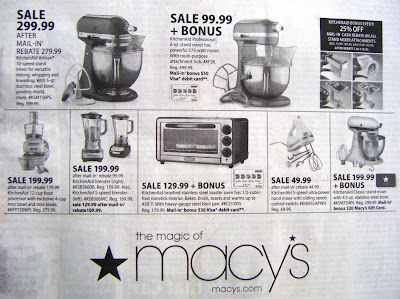
In terms of shopping, though, the day after Thanksgiving has been regarded as the kickoff to the holiday shopping season since the start of the Macy’s Thanksgiving Parade in 1924. The day after Thanksgiving, retailers would begin their “After Thanksgiving Sales,” of which shoppers were eager to take advantage. “During the Great Depression, President Roosevelt changed the date of Thanksgiving to a week earlier so that merchants could have more shopping days in the season in which to sell their wares.” (3) The day was not called “Black Friday” until around 1966 in Philadelphia when shoppers clogged the streets, causing chaos for police, who gave the day its new name. Still, this name for the holiday season kickoff did not see widespread popularity until recent years, around 2002. (4)

Black Friday 2009

After a year of recession and even longer in a sluggish economy, many retailers are placing even more hope than usual in their holiday sales to boost their annual profits. However, even though reports indicate that the recession has past, the lingering effects still remain. Unemployment and underemployment is still very high, and the effects will continue through the holiday season. Even those who keep their jobs have reportedly learned from past financial mistakes and the hit they have taken in the last couple of years, and will subsequently shop much more conservatively this year. Many shoppers report that they do not plan on purchasing with credit anymore, and are shopping just for the good deals and nothing else—news that retailers do not like to hear. Their doorbusters are meant as a means to get you in the door… so that you can also buy other things. I like to see people being smarter about their shopping and spending habits, although I hope retailers can figure out a way to stay profitable (perhaps--shock!--in ways that do not rely solely on crazy Q4 shopping) for the sake of our economy.

Further Reading

WSJ Article for this year’s Black Friday
Reuters Report (Yahoo!) on Initial Black Friday Analysis
Retailers are encouraged but cautious (Yahoo!)

References

1. “Black Friday,” Snopes, http://www.snopes.com/holidays/thanksgiving/shopping.asp, accessed 11/27/09.
2. “Black Friday,” Answers.com, http://www.answers.com/topic/black-friday, accessed 11/27/09
3. Lowery, A "Why is it Called Black Friday? The History and Origin of Black Friday." Why is it Called Black Friday? The History and Origin of Black Friday. 18 Nov. 2009 EzineArticles.com. accessed 11/27/09 .
4. “History of Black Friday and Cyber Monday.” http://www.blackfridayandcybermonday.com/, accessed 11/27/09

Saturday, November 21, 2009

Article Critique! Burger King Lawsuit


In case you haven't heard, Burger King franchise owners are suing Burger King corporate for forcing them to launch a $1 double cheeseburger promotion. Franchise owners claim that selling the cheeseburgers at $1 makes them take a $0.10 loss.
I am sure (or I hope, at least) that the lawsuit will dig deep in to the balance sheets of how this promotion affects the business. But the problem I have with articles like this is that they only tell part of the story. This particular story might lead you to feel sorry for the poor franchise owners who have to lose money at the demand of the guys in suits. Surprise! News stories don't always give you the entire story.
Some observations on this lawsuit:
  1. There is always a bit of tension between the field (stores/franchises) and the corporate headquarters, with the field believing that corporate lives in its ivory tower and doesn't care about the needs of the field, and with corporate believing that the field doesn't appreciate the research done behind the scenes for decisions and is lazy about implementation. Bickering like this is bound to happen if communication between the two is lacking in the slightest. Burger King corporate claims that this promotion was tested before launch, but did it share the details of the test with the franchisees, and the forecasted results?

  2. In the article, the NFA generalizes the franchisees' cost structure by saying that $0.55 goes toward ingredients and $0.45 goes toward overhead. However, overhead costs are spread out over all incoming revenue (not just the double cheeseburger), so the "loss" would be less than $0.10.

  3. This promotion is clearly meant to be a loss leader, a tactic employed by a lot of companies, and virtually all fast-food companies. You sell an item at a loss to encourage more traffic and hope that more people will buy other things that give you more profit. This often works, and the article mentions that an analyst predicted traffic would increase by 20% with this promotion. This additional revenue should in theory make up for the loss from the double cheeseburger.

So, I thought I'd try to work out some "back of the napkin math" to see if I can find out just how much "loss" this is causing the franchises to take. I had to make a few assumptions to work this out, but I think you can see that the fight is far from easy to call.

According to Burger King's financial statement, their 3-month revenue total ending 9/30/09 is $636.9M, which would average out to $212.3M per month. If we assume that the average visit brings $5 in revenue, then that would mean the chain sees about 45 million visits per month. With the promotion, the analyst predicts an increase in visits by 20%, bringing it to about 55 million visits per month.

Here's where it gets a little tricky because there is a lot of information I don't know. I don't know what the double cheeseburger was selling for before the $1 promotion, and I don't know what proportion of sales the double cheeseburger makes up, or how that proportion might have shifted after the promotion (the promotion might mean the proportion of double cheeseburgers sold compared to other things may have increased). Lets say the double cheeseburger was selling for $3 before the promotion (and the promo reduced the double cheeseburger transaction totals by $2, to $3). And lets say that (generously) half of the visits take advantage of the promotion with relatively no other change in their other purchases (they still buy a coke or whatever else they would normally get). I made this so generous because there might also be some people who come just for the double cheeseburger and nothing else, which is also a number I couldn't guess. That would mean the revenue brought in would look like this:

($5*27.5M visits)+($3*27.5M visits) = $137.5M+$82.5 = $220M/month

$220M-$212.3M = +$7.7M/month

This works out to be an increase in revenue by almost $8M/month. An increase! Now, if the traffic is increasing by 20%, total costs are likely to increase as well, although not likely at the full 20% rate because economies of scale can be enjoyed through purchasing and cooking in bulk, and fixed costs like rent will stay the same.

Obviously, with so many unknown variables, this math is not reliable. But the point that I put forth is that there is more going on in this promotion and in the lawsuit than just what appears in the news, and that this fight might be much closer than it would appear. The lesson here is to take news stories like this with a grain of salt and not rush to the same conclusion that the article may lead you to believe.

Sunday, November 8, 2009

Fun!

This is a huge topic that I couldn’t possibly do full justice to in one blog entry, so I am sure this won’t be the last time I write about it. As a marketer, I can personally say that marketing is fun for me (of course), but trends are pointing to marketing being fun for the consumer, too. There have been fun ads floating around for years—just watch some creative ones launched during the Super Bowl and you’ll probably find yourself laughing more than feeling compelled to go to the store to buy something. However, relying only on print or television ads is not enough anymore. These days, you can’t get consumers fully invested in your brand unless you conduct some kind of engagement marketing.

If you’re not sure what this means, I’ll first point you to a recent viral video sweeping YouTube from Volkswagon Sweden. The video introduces something called the “fun theory,” showing an experiment conducted on a stairway in Stockholm to prove that healthier or more positive actions can be produced more often by making them more fun. The campaign for Volkswagon doesn’t stop there, however. On the fun theory website, more video examples of the fun theory are posted, and a contest for site visitors to engage in suggesting their own ideas to support the theory. Volkswagon also plans to follow-up with ads for their environmentally friendly cars, again to illustrate that doing the right thing doesn’t have to be boring, tying the whole campaign together.


The idea with engagement marketing is that people accept things more if they contribute to them. And obviously, if they are having fun at the same time, they will keep coming back for more engagement. There are endless examples of this—web chat, blogs, product ratings, games, social networking, media, and phone applications are just a few. Engagement creates more positive associations with a company or product, meaning that consumers are more likely to use products themselves, recommend them to others, and have stronger loyalty with that brand. In the Volkswagon example, consumers were engaged by viewing the video (and then posting it on Facebook or sharing the link with their friends), and will tie that positive experience to Volkswagon with the follow-up ad as well as the contest, whether they submit an idea or enjoy the ideas submitted by others.

And now, the fun part. Here are some more examples of engagement marketing, for your interactive pleasure.
• In a well-known example, Amazon.com was one of the first to ask consumers for product reviews on their website. Consumers trust the reviews more if they come from “regular people” rather than a corporation, and they are more engaged in Amazon by reading those reviews or writing some of their own.
• On the flip side, WalMart found itself the victim of a social media prank when users began posting sarcastic reviews of its caskets on its website. The reviews were monitored and eventually removed, but they still made headlines, and perhaps even in this case there is no such thing as bad press.
• FAO Schwarz (recently acquired by Toys ‘R’ Us) engages visitors to its website by having them create their own muppet character in the “Muppet Whatnot Workshop.” The created muppet characters are then, of course, for sale.
• Pizza Hut created a phone application allowing users to order pizzas at a discount as well as play games, generating a reported $1 million in sales. Not bad.
• Hasbro launched its “Trivial Pursuit Experiment” to find out who is smarter: Men or Women? Users can log onto the site, join their team, and play the game by answering trivia questions and contributing to their side.

More Reading:
Author Alan Moore explains more about engagement marketing

Sunday, October 25, 2009

Price War

Although I was hesitant at first to write about the current book price war between WalMart/ Target/ Amazon.com due to my own personal history in the book business and my desire to write about more of a variety of topics, I have to admit that such a compelling and interesting story of pricing does not happen terribly often.

Whoever starts a price war better be sure about what they’re doing. This is a strategy that is difficult to get out of once you start it, and only those with strong operations and balance sheets with survive. Usually, the goal is to force others out of the market and gain market share. The problem is that market share does not automatically lead to profitability, which is why this move is often a mistake.

What happens:
Company A lowers prices. Company B needs to compete, so it lowers its prices as well.
Repeat until one company either
• Loses so much money in the price cuts that it can’t stay in the business
• Has to raise prices back up to account for lost profits, and likely loses customers and subsequently withdraws from the business
• Prices remain at the lower price as the new market standard, forcing out any companies who can’t sustain it and making it more difficult for new companies to enter the market.
If the price war ends and the “losers” are forced out, the “winners” can then raise prices again, sometimes to an even higher level than before, depending on who is left in the market.

Illustration—the “Prisoner’s Dilemma”

Neither company wants to be the first to climb out of the hole because they would lose (by falling into quadrant II or III). Both companies have to come out at the same time to get back to quadrant I, and they can’t legally communicate with each other directly on their pricing, so no one wants to budge, and they both end up losing (staying in quadrant IV).

Market competition is healthy—it forces companies to find the best ways to meet consumer needs to compete for their business. And usually, since for-profit companies are interested in making money, they would be interested in finding the appropriate price that would meet demand and consumer willingness-to-pay, which would be comfortably high enough to make money and low enough to draw consumers. However, before the average consumer gets too excited about falling prices on their favorite products, there are several things to consider:

Why a price war is bad
1. Once companies get involved with a price war, it’s difficult to get out of it. If it withdraws and raises prices back up, it loses business to the company that still has the lower prices. If it stays in, however, it could potentially lose a lot of money with cut prices that often go below costs and has to hope it is the stronger company to win the war.
2. Usually the price war affects a lot more down the supply chain than Joe Consumer realizes. In the case of the book price war, publishers and even authors get less money because there is a smaller pie to pass out. This might mean that some publishers may go out of business, and some authors may not be able to write as much and need to find other income sources. Because of reduced funding, other activities such as book tours may be reduced or eliminated.

The Book Price War
In the case of the current book price war, it is difficult to say what exactly will happen. The major players involved did so to try to lure in customers to the rest of their products, and used books as a sacrificial lamb. They are most likely losing money on the lower-priced books, but hope that interested customers will make up the difference in purchasing other products. That means that—you guessed it—prices are likely a bit higher on those other products, or at least their profits are a bit larger. Since the selection of books at WalMart and Target is lower than at major booksellers like B&N and Borders, the large chains will probably take a hit, but not be forced out of business (although those reduced-price blockbusters do bring in a big chunk of the business). Small booksellers will have a harder time holding steady, though, because they usually can’t cut prices as much and are already at a disadvantage in selection. Amazon.com has the advantage of the broad selection as well as the ability to cut prices in a sacrificial category, so I predict that they will come out on top, however it plays out.
Predicted winner: Amazon.com

Further Reading


Tuesday, October 13, 2009

Brand Associations

Basic Branding

When we make a choice at a store about what to buy, there is usually a lot more at play in our minds than even we realize. Celebrity perfumes are generally successful not because they necessarily smell better or because the celebrities who make them are particularly good at creating perfume. But simply having that celebrity associated with the perfume gives that fragrance an image—of status, of coolness, of luxury, or some other such impression that is related to that celebrity. And if consumers relate to that image or aspire to make it part of their lives, they are more likely to buy it. The same goes for all images that appear in any advertisements—they are not there just to look pretty or appealing to the senses. They also appeal to something deep within the type of customer the company is targeting—a feeling, a personal value, a wish or aspiration, or a lifestyle.

Psychology

While some of us would like to think we are immune to the influence popular culture or advertisements have on our decision-making skills as consumers, marketing in this way really is based on the psychology of how we process information. The truth is that we make hundreds of decisions every day, small and large, and are bombarded with information everywhere that has some say in how we should make our decisions, whether it is values that we hold within ourselves or our family, influence from friends or co-workers, messages from the media, advertisements, the news, or the internet. When you walk into the aisle in the supermarket for laundry detergent, you are presented with dozens of options for detergent, sometimes at different prices, sometimes not, and all with different colors and claims on the packaging. How will you decide what to buy? We all try different routes—some rely solely on products they have used in the past or recommendations from others, some just choose the cheapest product no matter what. But for many of us, when there are so many important decisions to make in life, we often look for “shortcuts,” or assistance in making decisions so that we can more easily process all the information we have gathered. What branding does is create an easy reminder for what a product stands for so that we can instantly think of it when we see that product in the store, hopefully making our decision easier. The stronger and more positive that association is, the more often we will buy it over something else that has no association at all, even if the products themselves are very comparable.

Benefits of Association

Creating a brand image is not easy, cheap, or quick, unfortunately. Companies like Coca-Cola have spent a lot of money over a lot of years to become arguably the most recognizable brand in the world, through many avenues (advertising, distribution, sponsorships, endorsements, etc.). This becomes a real challenge for small or startup businesses to compete in the marketplace. But even though building a brand is no small task, small companies can make a big leap of progress in developing an image for themselves by branding by association. By simply building a relationship with another company (or public figure or non-profit organization, etc.), a company can quickly tell the general consumer what that company stands for. And often times if you can find a company or person who can also benefit from the relationship, the partnership can cut down on costs and both parties win.

Example Ads
A great example of brand associations is advertising from Gap. Gap positions itself as a retailer that sells great quality basics, and is known for t-shirts and jeans. Yet in its advertising, it often features very simple photographs of different celebrities wearing Gap clothes, personalized in their own style. The ads feature a wide variety of celebrities with very different styles, showing that with Gap's clothing, anyone can take basics and work them into their own style. Shown here are Will Arnett and Amy Poehler from a 2007 print ad.

Another example is shown here, in a video ad for the American Cancer Society, featuring John Wayne. This association is one of ultimate "coolness and masculinity," suggesting that one should not feel less cool or manly for getting a cancer screening or checkup, or for giving up smoking. This is most likely based on research that people may not be getting screenings because they feel too embarrassed (although I can't confirm that). Ironically, John Wayne did commercials for cigarette companies like Camel in the 50s, and is well-known for his many years of smoking and his battle with lung cancer. This makes his message for the American Cancer Society even more influential.

Wednesday, October 7, 2009

Introduction

I would like to welcome you to reading my latest professional venture—a blog where I can ponder all things marketing. My interests in marketing are vast, so I plan to cover all kinds of topics:


• basic marketing elements
• analyzing modern advertisement
• reviewing market research methods
• offering thoughts on current marketing trends
• consumer psychology
• etc.

Also, because I am interested in other business issues, I expect I will occasionally deviate from core marketing topics to discuss other business-related topics that a good marketer might be concerned with:

• leadership
• staff incentives and productivity
• the green movement/sustainable businesses
• reflecting on modern business trends or strategies
• discussing what’s “in the news” in business
• etc.

My goal for this blog is to discuss marketing topics in a practical way. I believe marketing to be part science and part gut instinct, so I think a blend of the two is the best way to approach a blog like this. Therefore, I plan to conduct some baseline research where necessary, and add in my thoughts on the issues based on my own knowledge and experience.

I won’t go into a lot of detail about who I am or my credentials; you can read about those things in my profile if you would like. But I hope that my posts will open up a discussion with people of all sorts—the beauty of marketing is that it is all about serving the consumer, and we are all consumers. Consumers may not know how a product gets from the factory to their local stores or how they got on certain mailing lists to receive certain catalogues, but they make choices every day about what products to buy and how they will manage their homes, and are constantly faced with marketing messages everywhere they look. Marketing affects us all no matter what we do for a living. Therefore, I hope that what I write about will be of interest to everyone from those deeply involved in marketing to those who know nothing about it.